
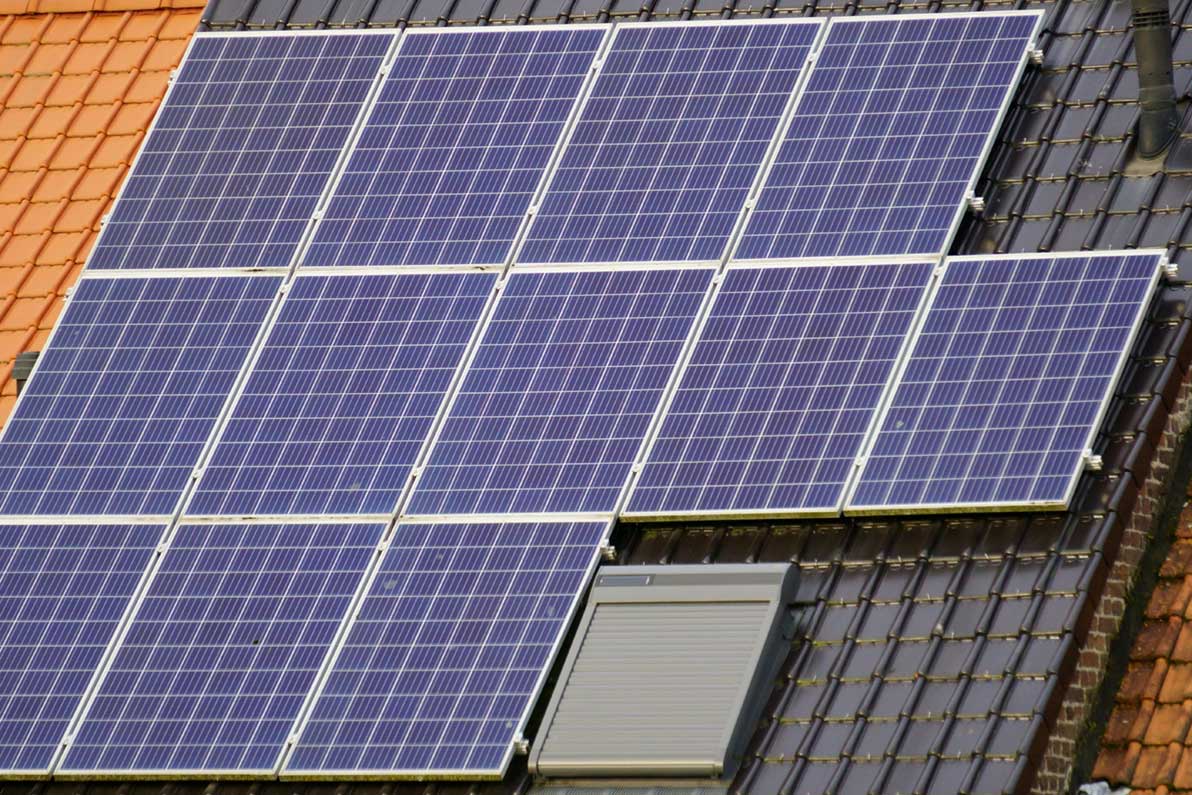
Professional solar power design, properly integrated with the renovation
When planning a major renovation, most homeowners naturally focus on space, layout, finishes and how the house will look once the work is complete. All of that matters. But a good renovation should also ask another important question:
How will the home perform once the work is finished?
On a current four-bedroom detached home upgrade in Fareham, we are including solar power as part of a wider programme of improvements. The aim is to help the home run more intelligently, reduce reliance on grid electricity and give the homeowner better long-term control over energy costs. This is not just about adding panels. It is about professional system design, properly integrated with the renovation.
Moving Towards Energy Independence
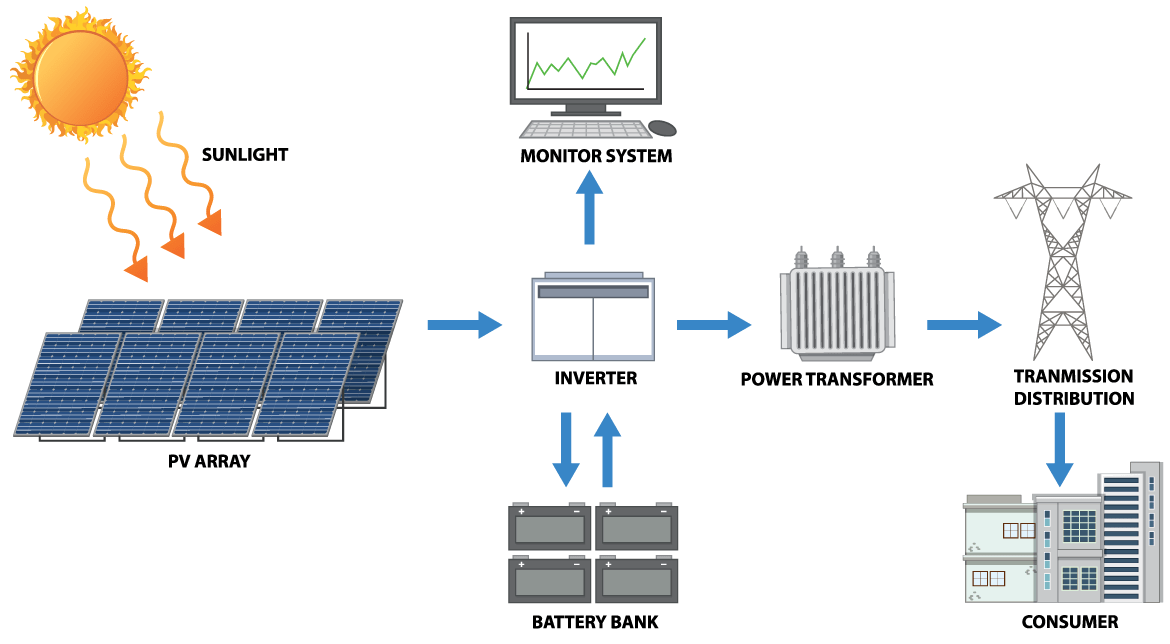
Solar power is often seen as a way to reduce the electricity bill. That is true, but it undersells the bigger benefit. The real value is that the home starts to generate, store and use more of its own energy.
For context, Ofgem estimates that a typical household in England, Scotland and Wales uses around 2,700kWh of electricity per year. Larger family homes, especially those with electric vehicles, home offices, heat pumps or higher daily demand, can use considerably more.
For this type of four-bedroom detached home, the proposed system is expected to generate around 6,500kWh of electricity per year. That is a significant amount of usable renewable energy, especially when paired with battery storage.
The specialist proposal also estimates that the system could offset around 65% of the home’s electricity consumption. That is a strong move towards energy independence. Not full disconnection from the grid. Not a magic wand. But a much smarter way for the home to operate day to day.
Designed by Specialists, Integrated by Syze
The technical solar design has been prepared by our renewable energy specialist partner, SA Energy. They provide the detailed system modelling, panel layout, battery sizing, inverter selection and performance calculations.
Syze’s role is to bring that specialist design into the wider renovation. That means coordinating the solar works with the programme, scaffold, roof access, electrical routes, equipment positions, other trades and the practical reality of the house as it is being upgraded.
For the homeowner, the benefit is a renewable energy system that has been considered as part of the whole project. It is designed by specialists and integrated by a renovation team that understands the property, the programme and the finished home.
A Complete System, Not Just Panels
For this type of home, the proposed package includes:
- roof-mounted solar panels
- battery storage
- inverter technology
- electric vehicle charging capability
- dedicated renewables fuseboard
- roof mounting system
- bird protection
- isolation and surge protection
A typical complete system of this type is around £17,600, based on the proposal prepared for this project. That includes the main solar, battery and electric vehicle charging components, rather than just a headline panel price. The value is not just in the panels.
It is in the complete system design, the storage capacity, the safety elements, the future use of the home and the way it is all brought together.
Why the Battery Matters
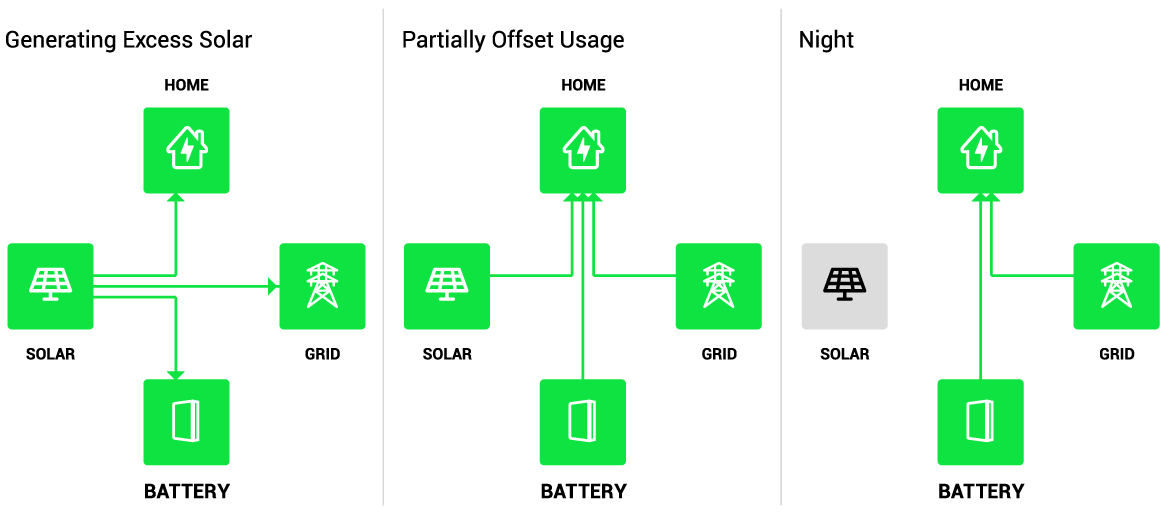
Solar panels generate energy during daylight hours. Family homes often use a lot of electricity later in the day, when people are cooking, washing, charging devices and settling into the evening. The battery helps bridge that gap.
Instead of sending more unused solar energy back to the grid during the day, the system stores more of it for use later. For this type of installation, the proposal estimates that battery storage can increase the amount of solar energy used within the home from around 3,600kWh per year to around 5,900kWh per year.
It also estimates grid electricity independence improving from roughly 36% with solar only to around 59% with battery storage. In simple terms: The battery helps the homeowner use more of the energy they have already generated.
That means better value from the panels, less reliance on buying electricity from the grid and more control over how the home uses energy.
The Payback Picture
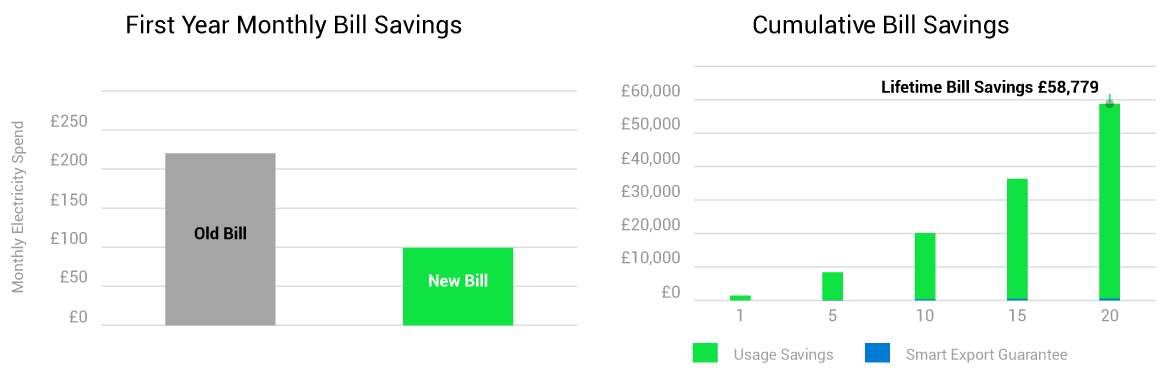
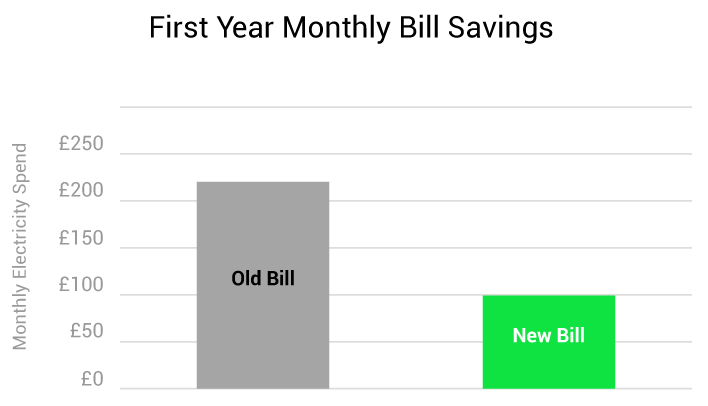
For a larger family home, solar with battery storage is not only a sustainability decision. It is a long-term running-cost decision. Using the assumptions in the specialist proposal, a complete solar, battery and electric vehicle charging system of this type shows:
| Item | Typical Estimate |
|---|---|
| Complete system cost | £17,600 |
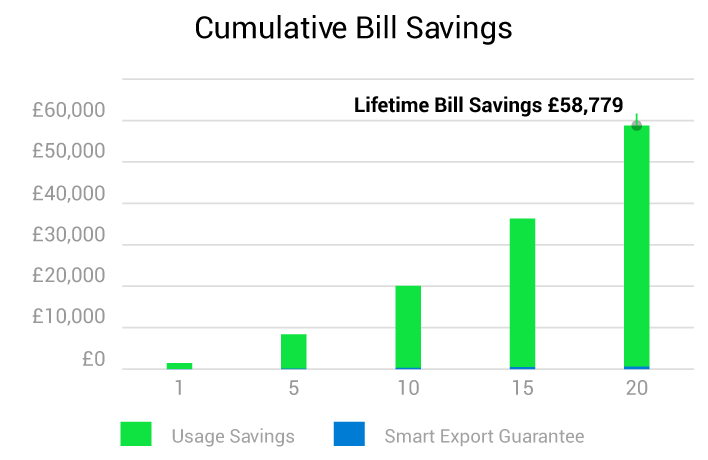
| Estimated lifetime utility bill saving | £58,779 |
| Estimated net saving after system cost | £41,179 |
| Estimated payback period | 9 years, 1 month |
These figures are projections, not guarantees. Real savings depend on weather, electricity tariffs, export rates, household habits and how the system is used. But the direction is clear.
For the right home, properly designed solar can become a serious improvement in how the house runs, with a clear payback route and long-term financial benefit.
Cleaner Energy, Measurable Benefits
One of the strongest benefits of solar is that it quietly produces clean electricity in the background. For this type of system, the proposal estimates an annual reduction of around 2 tonnes of CO2. It also presents the lifetime environmental benefit as equivalent to:
- 49,497km of car travel avoided
- 318 trees planted
- 35 long-haul flights avoided
Those comparisons make the environmental benefit easier to understand. Carbon figures can feel abstract, but kilometres of car travel, trees planted and flights avoided are much more relatable.
It shows that renewable energy can provide a meaningful sustainability gain while still being a practical home improvement.
Why Integration Matters
Solar works best when the details are considered early. For this project, integration means coordinating:
- scaffold and roof access
- panel positioning
- cable routes
- equipment locations
- electrical connections
- renewables fuseboard
- survey checks
- Distribution Network Operator application, known as a DNO application, where required
The proposal includes a site survey before final installation to confirm roof areas, panel layout, access requirements, cable routes, electrical supply and equipment locations. That planning helps the installation land cleanly within the wider project.
For the homeowner, the benefit is simple: a system that has been professionally designed, properly coordinated and installed with the finished home in mind.
Part of a Bigger Home Performance Upgrade
Solar is one part of the wider home performance picture. This project also includes planning around:
- Air Source Heat Pump, or ASHP
- Underfloor Heating, or UFH
- Heating, Ventilation and Air Conditioning, or HVAC
Those systems deserve their own article, so we will cover them separately. The important point is that modern renovation is moving beyond decoration and extra space. A properly upgraded home should look better, feel better and run better. Solar helps with that.
It gives the home renewable electricity. The battery helps store it. The wider heating and ventilation strategy helps the home use energy more intelligently.
The Takeaway for Homeowners
Solar power does not need to be confusing.
When it is professionally designed and properly integrated with the renovation, it becomes a practical upgrade with clear homeowner benefits:
- lower electricity bills
- better use of renewable energy
- less reliance on the grid
- support for electric vehicle charging
- battery-backed evening use
- cleaner energy
- stronger long-term control
- a more future-ready home
For homeowners already investing in a major renovation, this is the right time to consider how the home can perform better, not just how it will look when finished. A quieter, smarter upgrade. And one that keeps working long after the builders have left.
Further Reading
GOV.UK Clean Energy – Solar panels
Homeowner guidance on solar panels, batteries, heat pumps and bill savings.
Ofgem – Average gas and electricity usage
Useful benchmark figures for typical household energy use.
Energy Saving Trust – Solar panel battery storage
Independent advice on why battery storage helps homeowners make better use of solar energy.
Fareham Borough Council – Household Energy Efficiency Info
Local information on household energy efficiency support, solar PV and battery storage schemes.
